Independent laboratoryNamed on the certificate once it is released
No released COA yet
No released COA is available for this lot.
Check document status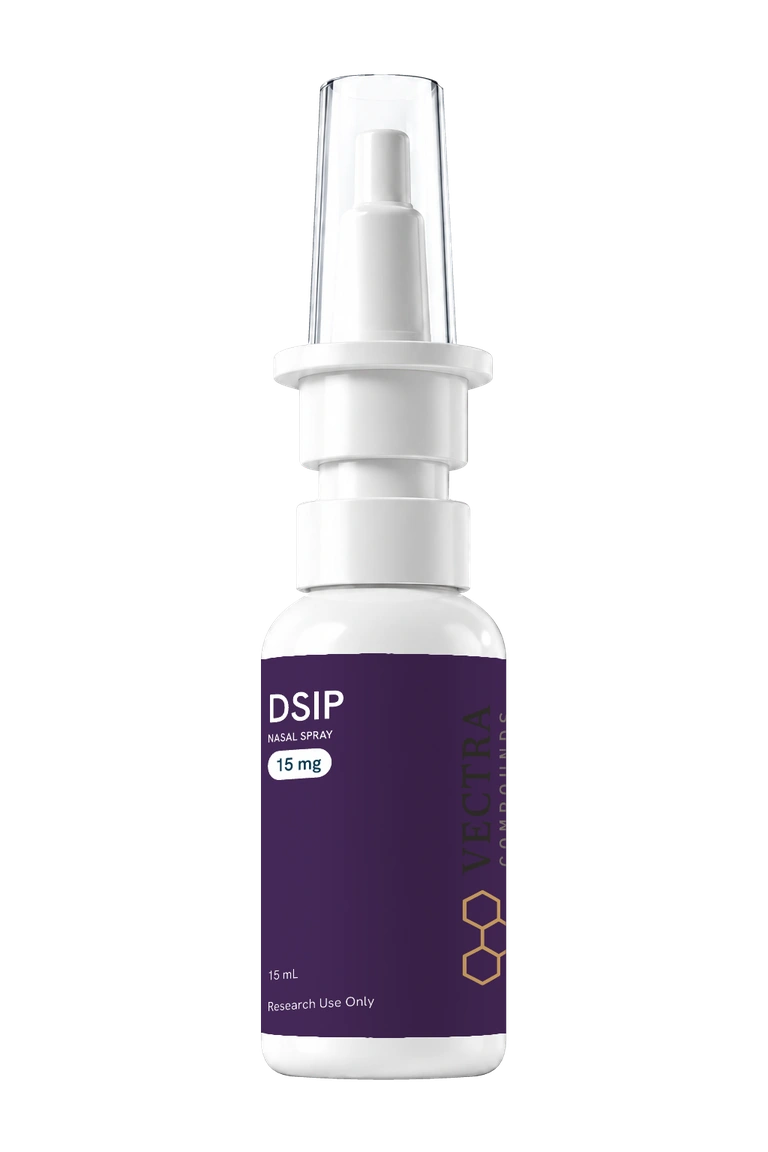
DSIP peptide reference material for in-vitro laboratory research and analytical method development. Research use only. Not for human or veterinary use; no therapeutic, preventive, or diagnostic claims are made or implied.
Lot testing is in progress. A published COA is not yet available for this lot.
Shipping and taxes at checkout. Inventory is checked when adding to your bag.
Vectra publishes the laboratory certificate for every lot it releases. No released lot certificate is available for this size yet, so no current-lot results are shown.
Browse the COA libraryNo released COA is available for this lot.
Check document status| Analysis | Result | Status |
|---|---|---|
| Analytical results | Not available | No report |
Analytical results are not supplied until a certificate is released.
DSIP peptide reference material for in-vitro laboratory research and analytical method development. Research use only. Not for human or veterinary use; no therapeutic, preventive, or diagnostic claims are made or implied.
Explore published literature Search PubMed for DSIPRefer to the product label and lot-specific documentation for storage and handling instructions.
DSIP supplied in the selected 15 mg Nasal Spray · 15 mL presentation. Other supplies are listed separately unless explicitly included in an offer.
Open the certificate attached to this product and check that the lot matches your unit. If a report is missing, contact Vectra with the product code and lot.
DSIP is a synthetic nonapeptide neuropeptide of 9 amino acids. Sequence: Trp-Ala-Gly-Gly-Asp-Ala-Ser-Gly-Glu (WAGGDASGE). Endogenously produced in the hypothalamus and pituitary gland.
Proposed to influence slow-wave sleep architecture, modulate melatonin release, and dampen CRF-mediated stress arousal. These are proposals, not established mechanisms. We make no claim as to mechanism or effect.
Discovered in 1974. Small human trials are on record, including work by Schneider-Helmert and colleagues published between 1981 and 1987.
Studied in sleep architecture and stress-axis signalling. We supply it as a reference material for in-vitro laboratory research and analytical method development only.
The human trial record is small — on the order of 70 subjects in total across the published studies — and dates largely from the 1980s. No modern replication is recorded.
Reported as well tolerated across those small trials, with rare occurrences of headache, vomiting, or vagal reactions.
Our sources carry no CAS number, molecular formula, molecular weight, or stability data for DSIP.
Our sources are contradictory on its status, carrying both approved and research-use-only statements. Treat the regulatory position as unresolved rather than settled in either direction. Note separately that FDA's advisory committee did NOT recommend emideltide for the 503A Bulks List in July 2026. No therapeutic, preventive, or diagnostic claims are made or implied.
Not approved as a medicinal product in any jurisdiction. Current FDA position: 503A Category 2. Not recommended for the 503A Bulks List by the July 2026 committee. We supply this material as a research-use-only reference material. No therapeutic, preventive, or diagnostic claims are made or implied.
Yes. The FDA Pharmacy Compounding Advisory Committee considered it at its July 23–24, 2026 meeting. The committee's vote was: not recommended (6–7, 1 abstention, July 24). Reviewed as emideltide. This was the meeting's only rejection — the committee voted against inclusion 6–7 with one abstention. The votes are advisory and not binding. FDA makes the final determination, and inclusion requires proposed and final rulemaking, with formal approval by the Secretary of Health and Human Services. None of the six is legal to compound on the strength of the vote alone; reporting at the time put the earliest realistic timeline at roughly twelve months.
FDA reviewers noted that serious adverse events among the seven substances under review were reported only in studies of emideltide, administered intravenously, with a reported plasma half-life of approximately eight minutes. FDA career reviewers published briefing documents recommending against all seven substances, concluding that none met the agency's four-part evidentiary standard.
Category 2 is not a ban and not a scheduling action. It describes where a nominated substance sits in an unfinished evaluation process. An interim FDA designation for nominated bulk drug substances for which the agency identified potential significant safety risks. Substances in Category 2 sit outside FDA's Category 1 enforcement-discretion policy.
These are the specific, documented failure modes that lot-level third-party analysis addresses. A report reachable from the lot code printed on the vial — without asking the seller for it — is the only document that answers 'is this vial what the label says'. That is why every Vectra vial carries a QR code resolving to its own lot's published report.
Findings reported by commercial testing providers. Each names its source; none is registry- or peer-review-grade, so read them as a documented pattern rather than established prevalence.
Yes, and altered certificates have been reported in this market at material rates — see the testing findings above. Three properties make a report hard to fake:
Peptide identity data in the vendor market is often wrong in ways that are hard to see. Near-identical compounds get their CAS numbers, residue ranges, formulas and molecular weights swapped. A certificate can be internally consistent and still describe a different molecule than the label names. Most commercial peptide material ships as an acetate salt, not free base. The two forms have different measured masses, so a figure quoted against the wrong one will not reconcile. A report that does not state which form it assayed cannot be checked at all.
The standard our own reports are built to meet:
FDA has acted in this market between 2024 and 2026. Actions include a civil forfeiture over $1.7 million against a compounding operation, several rounds of warning letters to peptide vendors, and more than thirty letters in March 2026 concerning compounded GLP-1 products.
Buyers here increasingly compare document trail, not price.
Explore the published literature on DSIP. Start with the original papers, study methods and reported limitations.
Publications describe research on the molecule. They do not verify the identity, purity or performance of a Vectra product lot. See the lot-specific COA for product testing.
Your vial’s QR brings you to the product page, with its published COA alongside the product details.
These products are intended for laboratory research. Not for human or veterinary use.
DSIP peptide reference material for in-vitro laboratory research and analytical method development. Research use only. Not for human or veterinary use; no therapeutic, preventive, or diagnostic claims are made or implied.
Lot testing is in progress. A published COA is not yet available for this lot.
Shipping and taxes at checkout. Inventory is checked when adding to your bag.
Vectra publishes the laboratory certificate for every lot it releases. No released lot certificate is available for this size yet, so no current-lot results are shown.
Browse the COA libraryNo released COA is available for this lot.
Check document status| Analysis | Result | Status |
|---|---|---|
| Analytical results | Not available | No report |
Analytical results are not supplied until a certificate is released.
DSIP peptide reference material for in-vitro laboratory research and analytical method development. Research use only. Not for human or veterinary use; no therapeutic, preventive, or diagnostic claims are made or implied.
Explore published literature Search PubMed for DSIPRefer to the product label and lot-specific documentation for storage and handling instructions.
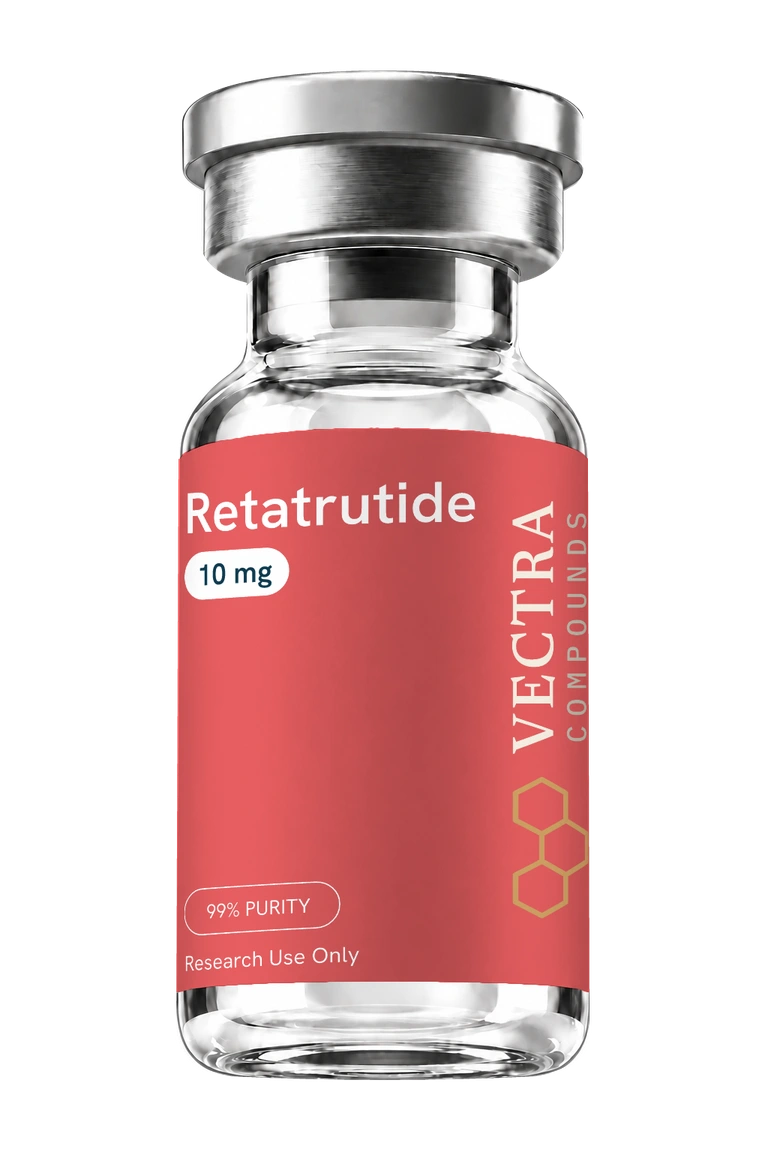
DSIP supplied in the selected 15 mg Nasal Spray · 15 mL presentation. Other supplies are listed separately unless explicitly included in an offer.
Open the certificate attached to this product and check that the lot matches your unit. If a report is missing, contact Vectra with the product code and lot.
DSIP is a synthetic nonapeptide neuropeptide of 9 amino acids. Sequence: Trp-Ala-Gly-Gly-Asp-Ala-Ser-Gly-Glu (WAGGDASGE). Endogenously produced in the hypothalamus and pituitary gland.
Proposed to influence slow-wave sleep architecture, modulate melatonin release, and dampen CRF-mediated stress arousal. These are proposals, not established mechanisms. We make no claim as to mechanism or effect.
Discovered in 1974. Small human trials are on record, including work by Schneider-Helmert and colleagues published between 1981 and 1987.
Studied in sleep architecture and stress-axis signalling. We supply it as a reference material for in-vitro laboratory research and analytical method development only.
The human trial record is small — on the order of 70 subjects in total across the published studies — and dates largely from the 1980s. No modern replication is recorded.
Reported as well tolerated across those small trials, with rare occurrences of headache, vomiting, or vagal reactions.
Our sources carry no CAS number, molecular formula, molecular weight, or stability data for DSIP.
Our sources are contradictory on its status, carrying both approved and research-use-only statements. Treat the regulatory position as unresolved rather than settled in either direction. Note separately that FDA's advisory committee did NOT recommend emideltide for the 503A Bulks List in July 2026. No therapeutic, preventive, or diagnostic claims are made or implied.
Not approved as a medicinal product in any jurisdiction. Current FDA position: 503A Category 2. Not recommended for the 503A Bulks List by the July 2026 committee. We supply this material as a research-use-only reference material. No therapeutic, preventive, or diagnostic claims are made or implied.
Yes. The FDA Pharmacy Compounding Advisory Committee considered it at its July 23–24, 2026 meeting. The committee's vote was: not recommended (6–7, 1 abstention, July 24). Reviewed as emideltide. This was the meeting's only rejection — the committee voted against inclusion 6–7 with one abstention. The votes are advisory and not binding. FDA makes the final determination, and inclusion requires proposed and final rulemaking, with formal approval by the Secretary of Health and Human Services. None of the six is legal to compound on the strength of the vote alone; reporting at the time put the earliest realistic timeline at roughly twelve months.
FDA reviewers noted that serious adverse events among the seven substances under review were reported only in studies of emideltide, administered intravenously, with a reported plasma half-life of approximately eight minutes. FDA career reviewers published briefing documents recommending against all seven substances, concluding that none met the agency's four-part evidentiary standard.
Category 2 is not a ban and not a scheduling action. It describes where a nominated substance sits in an unfinished evaluation process. An interim FDA designation for nominated bulk drug substances for which the agency identified potential significant safety risks. Substances in Category 2 sit outside FDA's Category 1 enforcement-discretion policy.
These are the specific, documented failure modes that lot-level third-party analysis addresses. A report reachable from the lot code printed on the vial — without asking the seller for it — is the only document that answers 'is this vial what the label says'. That is why every Vectra vial carries a QR code resolving to its own lot's published report.
Findings reported by commercial testing providers. Each names its source; none is registry- or peer-review-grade, so read them as a documented pattern rather than established prevalence.
Yes, and altered certificates have been reported in this market at material rates — see the testing findings above. Three properties make a report hard to fake:
Peptide identity data in the vendor market is often wrong in ways that are hard to see. Near-identical compounds get their CAS numbers, residue ranges, formulas and molecular weights swapped. A certificate can be internally consistent and still describe a different molecule than the label names. Most commercial peptide material ships as an acetate salt, not free base. The two forms have different measured masses, so a figure quoted against the wrong one will not reconcile. A report that does not state which form it assayed cannot be checked at all.
The standard our own reports are built to meet:
FDA has acted in this market between 2024 and 2026. Actions include a civil forfeiture over $1.7 million against a compounding operation, several rounds of warning letters to peptide vendors, and more than thirty letters in March 2026 concerning compounded GLP-1 products.
Buyers here increasingly compare document trail, not price.
Explore the published literature on DSIP. Start with the original papers, study methods and reported limitations.
Publications describe research on the molecule. They do not verify the identity, purity or performance of a Vectra product lot. See the lot-specific COA for product testing.
Your vial’s QR brings you to the product page, with its published COA alongside the product details.
These products are intended for laboratory research. Not for human or veterinary use.